Rick Rubin on AI: "The Punk Rock of Coding" and the Future of Creative Vision
Legendary producer Rick Rubin sees AI not as a threat to creativity, but as a democratizing force like punk rock—empowering ideas over technique.
1/6/20264 min read
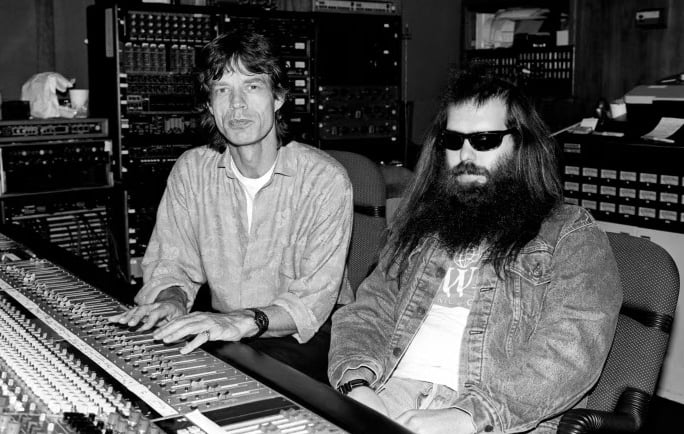
Rick Rubin has been a singular, transformative creative muse for artists across genres and generations. He stands as one of the most transformative figures in modern music production, a minimalist maestro whose influence spans nearly four decades and crosses virtually every genre boundary.
As co-founder of Def Jam Recordings in the 1980s, he helped bring hip-hop from the margins to the mainstream, producing seminal works for Run-DMC, LL Cool J, the Beastie Boys, and Public Enemy that fundamentally shaped the sound and cultural impact of the genre. But what distinguishes Rubin from his peers isn't just his extraordinary track record—it's his philosophy of stripping away excess to reveal the essential truth within an artist's work. Whether producing Johnny Cash's haunting American Recordings series, reinvigorating Metallica's sound, or crafting hits for Adele and Ed Sheeran, Rubin's approach remains consistent: create space for the artist's authentic voice to emerge. MTV's declaration of him as "the most important producer of the last 20 years" in 2007, alongside his inclusion in Time's 100 Most Influential People, merely confirmed what the music industry had long understood—Rubin possessed an almost mystical ability to hear what an artist could become.
Rubin's recent engagement with artificial intelligence reveals the same philosophical through-line that has defined his production career. Rather than viewing AI as a threat to human creativity, he sees it as a democratizing force analogous to punk rock's revolution in the 1970s. "The reason we go to certain artists, writers, or filmmakers is because of their point of view," Rubin explains. "AI doesn't have a point of view. AI gives you the ability to take your ideas, put them into this machine, and receive different iterations that would normally take much longer. It's more of a shaping process." This perspective is crucial: for Rubin, AI is not a replacement for human vision but an accelerator of it, a tool that compresses the time between conception and execution while leaving the essential creative spark firmly in human hands.
His book The Way of Code: The Timeless Art of Vibe Coding, created collaboratively with the AI chatbot Claude, explores what he calls "the punk rock of coding"—the ability to direct AI through natural language rather than traditional programming expertise. Just as punk rock allowed anyone with three chords and something to say to make music, vibe coding allows anyone with an idea and the ability to articulate it to create digital experiences. Rubin draws a direct parallel: "In the past, for music, you had to go to the conservatory and study for years and years. Then someday, you could play in a symphony. And then, when punk rock came along, you could maybe learn three chords in a day — and there were all these bands. That made it for everybody." For Rubin, who began his own music career through punk rock's DIY ethos, this technological shift represents not a disruption of creativity but its expansion—empowering those with vision who previously lacked the technical means to execute it. The book itself, a blend of ancient Tao Te Ching wisdom and cutting-edge technology, embodies Rubin's belief that the most profound innovations often emerge from unlikely combinations of the timeless and the contemporary.
“The reason we go to certain artists, writers, or filmmakers is because of their point of view. AI doesn’t have a point of view. AI gives you the ability to take your ideas, put them into this machine, and receive different iterations that would normally take much longer. It’s more of a shaping process.”
Rick Rubin
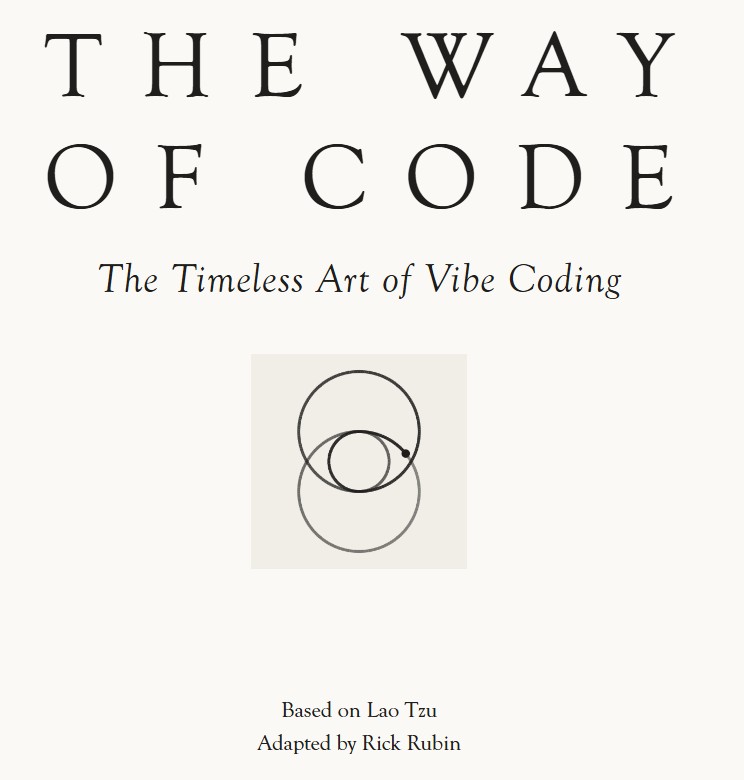
Rick Rubin's The Way of Code is a groundbreaking fusion of ancient wisdom and cutting-edge technology—a remix of Lao Tzu's 3,000-year-old Tao Te Ching reimagined for the age of AI. Created collaboratively with the AI chatbot Claude, this interactive book explores "vibe coding"—the practice of directing AI through natural language rather than traditional programming. Blending Rubin's legendary production philosophy with Taoist principles like "Do by not doing, and there is nothing that cannot be done," the book offers a meditative guide to creativity in the digital age.
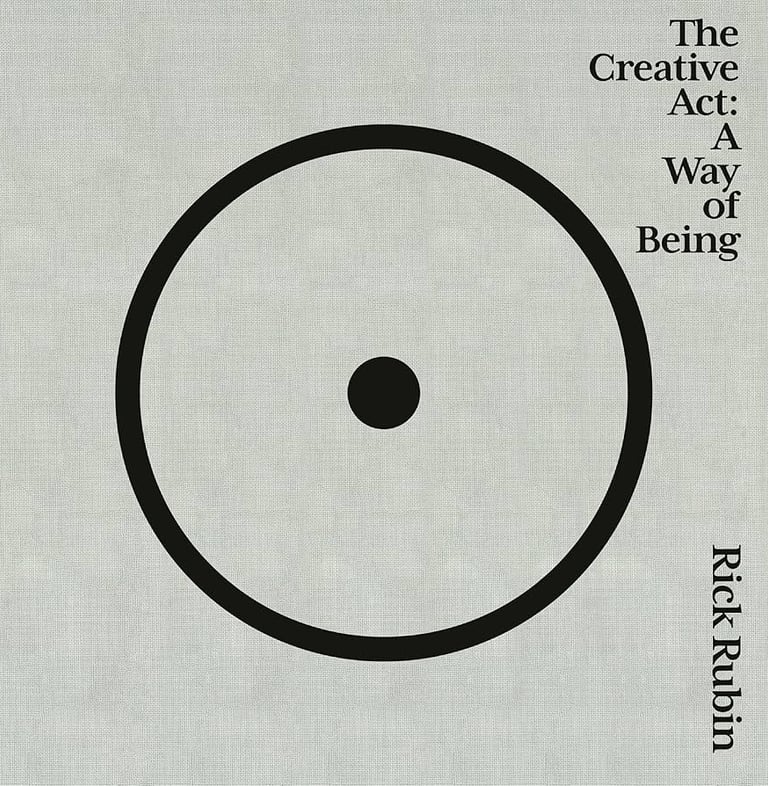
Note on "The Creative Act: A Way of Being"
Rick Rubin's previous book, The Creative Act: A Way of Being (2023), is a philosophical meditation on creativity that distills decades of production wisdom into 78 short chapters exploring the nature of artistic practice. Rather than offering technical advice or industry shortcuts, Rubin presents creativity as a spiritual discipline—a way of moving through the world with heightened awareness and receptivity to the subtle signals that surround us. Drawing from Eastern philosophy, mysticism, and his own experiences working with artists across every genre, the book treats the creative process as sacred work that requires humility, patience, and deep listening.
The book became an unexpected bestseller, resonating far beyond the music industry with entrepreneurs, writers, painters, and anyone seeking to live more creatively. Rubin argues that we are all creators by nature, and that the artist's task is not to force ideas into existence but to serve as a conduit for something larger—to tune into frequencies that already exist and translate them into form. Chapters explore concepts like "The Source" (the infinite wellspring of creativity), "Awareness" (cultivating presence to notice what others miss), and "Submerge" (the importance of total immersion in your work). Throughout, Rubin emphasizes that rules and expertise can become obstacles, and that beginners often possess advantages precisely because they haven't yet learned what's "impossible."
The Creative Act reads less like a how-to manual and more like a companion for the creative journey—offering gentle wisdom rather than prescriptive formulas. It's the literary embodiment of Rubin's production philosophy: strip away everything non-essential until only truth remains. For readers of The Way of Code, it provides essential context for understanding how Rubin views AI—not as a shortcut around creative discipline, but as a tool that can help us shape and iterate on ideas that still must originate from that ineffable human source he describes throughout the book.
Dive deeper into Rubin's creative philosophy and hear him discuss these ideas in his own words in this brilliant interview.