
When Indian Ragas Met Electronic Music
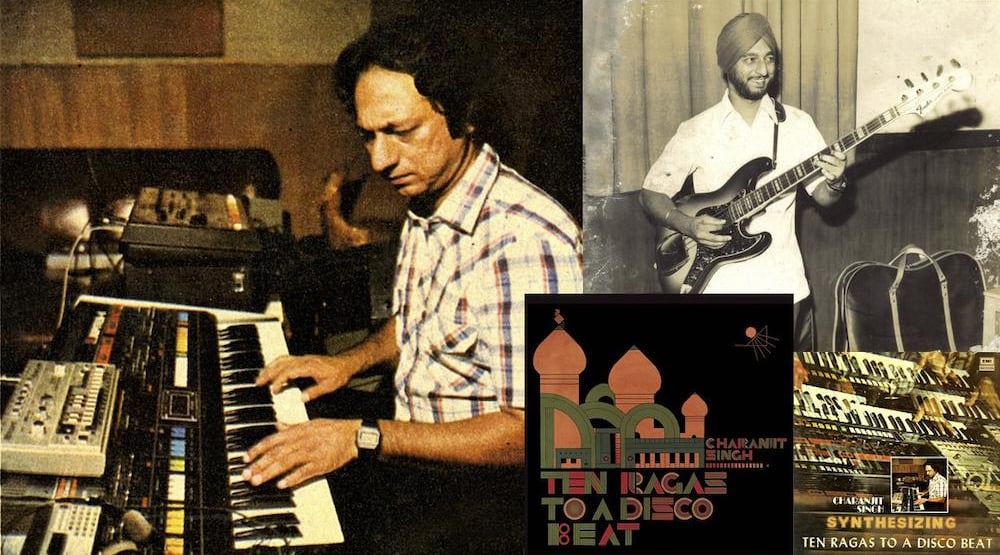
While the raga tradition stretches back thousands of years, one of its most surprising and influential moments came in 1982, when Bombay-based musician Charanjit Singh entered a studio with newly released electronic instruments and emerged with something unprecedented.
12/28/20254 min read
The Art of Indian Raga
At the heart of Indian classical music lies a profound concept that has evolved over millennia—the raga. Derived from the Sanskrit root meaning "colouring," "tingeing," or "dyeing," a raga is a melodic framework for improvisation that has the remarkable ability to "colour the mind" as it engages the emotions of the audience Wikipedia.
What Makes a Raga?
Ragas are considered a means in the Indian musical tradition for evoking specific feelings in listeners.
Unlike Western scales that simply define which notes to play, a raga uniquely defines a set of musical notes and their allowed arrangements to form melodies designed to evoke certain emotions Indian Classical Music. Think of it as a sophisticated musical grammar where every element contributes to creating a specific mood or atmosphere.
A raga is built upon several essential components:
Aroha and Avaroha: These are the ascending and descending patterns of notes that define the raga's basic movement. Each raga may use different notes in its ascending versus descending patterns, creating its unique character Artium Academy.
Vadi and Samvadi: The vadi is the most important note in a raga—its king note—while the samvadi is the second most important, or queen note. These two notes are always positioned three or four notes apart Indian Classical Music, creating a consonant relationship that defines the raga's tonal center.
Pakad: This is the signature phrase of the raga, a unique combination of note patterns that instantly identifies the specific raga Indian Classical Music. It's like the raga's fingerprint—immediately recognizable to trained listeners.
When Ragas Met Electronic Music: A Revolutionary Experiment

While the raga tradition stretches back thousands of years, one of its most surprising and influential moments came in 1982, when Bombay-based musician Charanjit Singh entered a studio with newly released electronic instruments and emerged with something unprecedented.
Singh, who had spent decades as a core figure in Bollywood's music industry performing bass, keyboards, and synthesizers on hundreds of soundtracks, released his debut album Synthesizing: Ten Ragas to a Disco Beat in 1982, using Roland's then-new TB-303, TR-808, and Jupiter-8 to blend Indian classical ragas with disco and electronic sequencing Wikipedia.
According to Singh, "There was lots of disco music in films back in 1982. So I thought why not do something different using disco music only. I got an idea to play all the Indian ragas and give the beat a disco beat – and turn off the tabla. And I did it. And it turned out good" Wikipedia.
What makes this album particularly remarkable is how Singh's approach revealed an unexpected compatibility between ancient raga structures and futuristic electronic instruments. Music critic Geeta Dayal noted that the TB-303's glissando function—its ability to slide from one note to another—made it perfectly suited for the sort of raga melodies that run slippery up and down the scale RA.
The album was largely forgotten after its release, garnering some interest on Indian national radio but becoming a commercial failure. However, it was rediscovered in 2002, and music journalists began recognizing it as perhaps the earliest example of acid house music, predating Chicago's seminal "Acid Tracks" by five years Wikipedia. Electronic musician A Guy Called Gerald, who performed with Singh, called him "a true pioneer—playing music from the 1980s that sounded more futuristic than what DJs were making in 2012" Wikipedia.
Ragas and Artificial Intelligence: An Unlikely Partnership
At first glance, the ancient tradition of Indian classical ragas and cutting-edge artificial intelligence appear to inhabit entirely different worlds—one rooted in centuries of spiritual devotion and oral transmission, the other born from silicon and code. Yet both systems share a fascinating structural similarity: they thrive on rules while simultaneously encouraging creative exploration within those boundaries. A raga has strict rules including arohana and avarohana (ascending and descending note sequences), a dominant note, and a specific mood and time of day, yet within these rules, musicians improvise endlessly. Similarly, AI thrives on rules through algorithms with parameters, training sets, and limitations, but the best AI models learn to bend the rules, adapting and modifying in ways that sometimes lead to creative breakthroughs. Both are masters of pattern recognition—seasoned musicians can identify a raga within seconds by recognizing patterns, phrases, and emotional cues, while AI excels at identifying hidden structures in massive datasets, making it a powerful tool for analyzing and even preserving the intricate structures of raga music.
This convergence opens exciting new possibilities for raga music in the digital age. AI's ability to process vast amounts of musical data means it can help preserve endangered ragas, analyze complex improvisational patterns, and even generate new compositions that follow traditional raga structures while exploring uncharted melodic territories. While AI-generated music may approach emotion differently than human musicians—working from patterns rather than lived experience—this doesn't diminish its potential value. Just as Charanjit Singh used electronic synthesizers to reimagine ragas in revolutionary ways, AI represents another tool for innovation and experimentation. The future may see AI and human musicians collaborating, with AI handling complex structural analysis and pattern generation while human artists provide the intuitive emotional guidance and cultural context. Rather than replacing the tradition, AI could become a new kind of student, learning from centuries of wisdom while contributing its own unique capabilities to keep raga music evolving and relevant for new generations.
Sources:
Wikipedia - Raga: https://en.wikipedia.org/wiki/Raga
Kennedy Center - Rhythm and Raga: https://www.kennedy-center.org/education/resources-for-educators/classroom-resources/media-and-interactives/media/international/rhythm-and-raga/
Britannica - Raga: https://www.britannica.com/art/raga
Indian Classical Music - What is a Raag: https://www.indianclassicalmusic.com/what-is-raag
Indian Classical Music - Raag Framework: https://www.indianclassicalmusic.com/raag-framework
Artium Academy - What is a Raga in Music: https://artiumacademy.com/blogs/what-is-a-raga-in-music-a-beginners-guide-to-understanding-ragas/
Boloji - What is a Raga? Its Structure and Emotional Analysis: https://www.boloji.com/articles/54781/what-is-a-raga-its-structure-and-emotional-analysis
Wikipedia - Charanjit Singh: https://en.wikipedia.org/wiki/Charanjit_Singh_(musician)
Wikipedia - Synthesizing: Ten Ragas to a Disco Beat: https://en.wikipedia.org/wiki/Synthesizing:_Ten_Ragas_to_a_Disco_Beat
Resident Advisor - Album Review: https://ra.co/reviews/7445